Simply refreshing the page resolved the problem, but it seemed to grdually get worse, often requiring three or four refreshes.
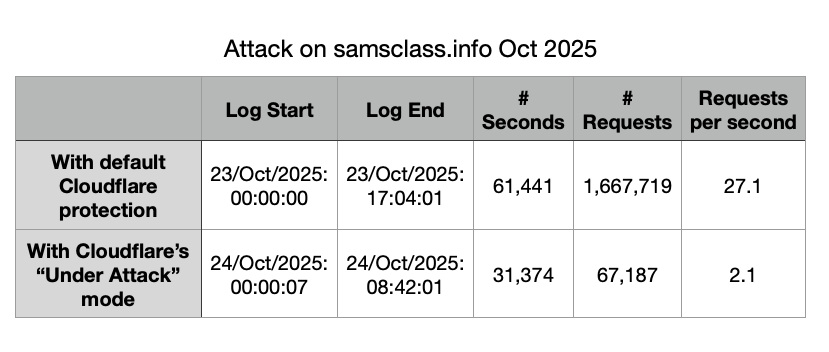
This blocked more than 90% of the attack traffic, as shown below, making my site responsive again.
As shown in the image above, some of the attack traffic was still getting through.
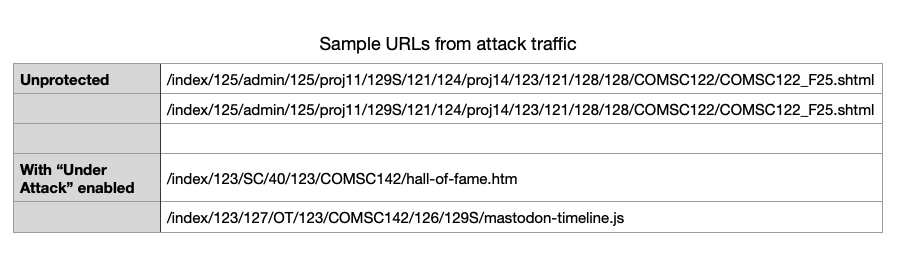
Since the attack traffic has a simple, obvious pattern (many folder names), I decided to try blocking it with a simple HAproxy scrubber.
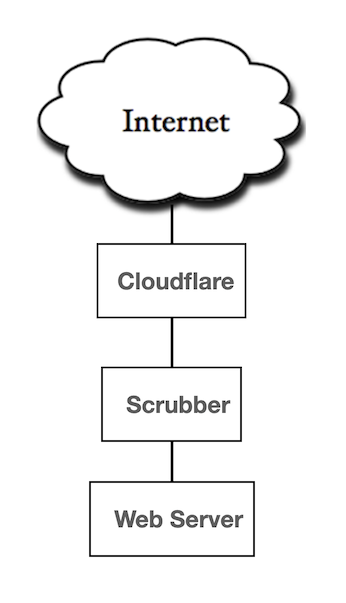
I changed my DNS record in Cloudflare to point to my scrubber, as shown below, and I turned off Cloudflare's "Under Attack" mode.
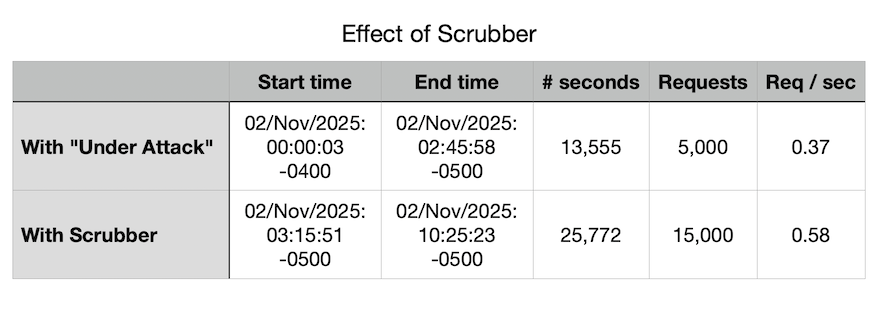
The scrubber is almost as effective at blocking attack packets, and allows "wget" requests, so this solution seems to be good for now.
It seems more like some sort of scraper or crawler, perhaps gathering data for AI training, which is absurdly broken, concatenating folder names at random. But who would write such a thing, and just leave it going for weeks without noticing how broken it is?
I examined the source IP addresses and there were many source IPs, some from China, some from other countries, as if it's being sent from some large set of proxies.
If this is a widespread attack, perhaps others will figure out more about it. It seems pointless to me.
Posted 11-2-25